

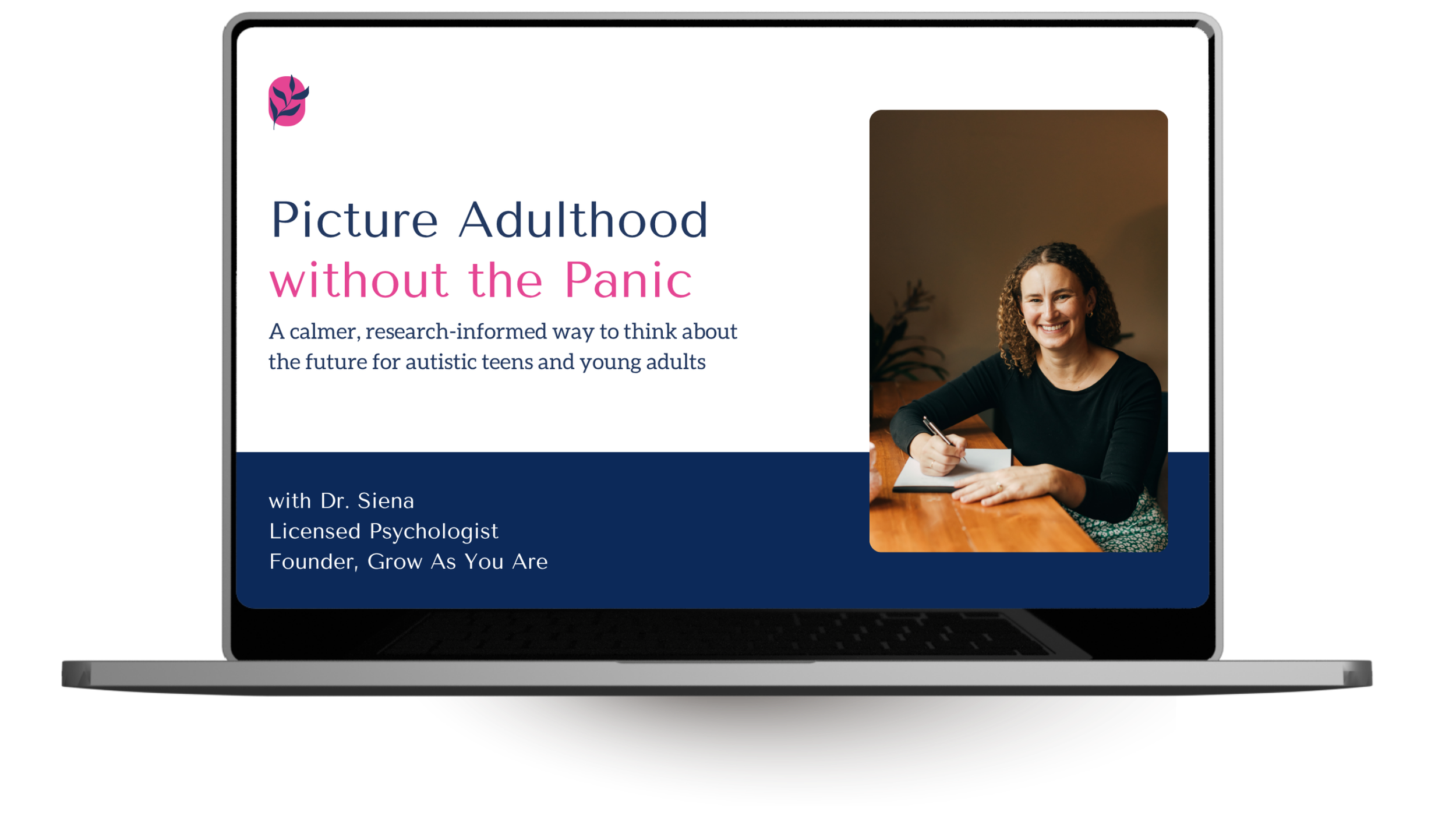
A free webinar to help you picture adulthood without the panic
A realistic framework for parents who want to better understand what adulthood can actually look like for their autistic teen or young adult — without spiraling into worst-case scenarios.

Support you can come back to
Support you can come back to
You don’t need to do everything at once.
These free resources are here for the moments when you want guidance, structure, and a steadier way to think through what this looks like for your child in real life.

Navigating Adulthood
Explore real options for life after high school — from college and transition programs to housing, employment, benefits, and support services.

Supportive Statements
Learn what to say when your teen gets stuck — without fixing, lecturing, or getting pulled into power struggles.

Capacity Compass
Know when to push, when to pause, and how to respond based on your child’s real-time capacity.
Rethinking what school can look like
The goal isn’t to force your teen to fit the system, but to find the kind of support that allows them to function and grow within it.

College Readiness
Help your teen assess the real-life skills needed for college — and start clearer conversations about what support may be needed.
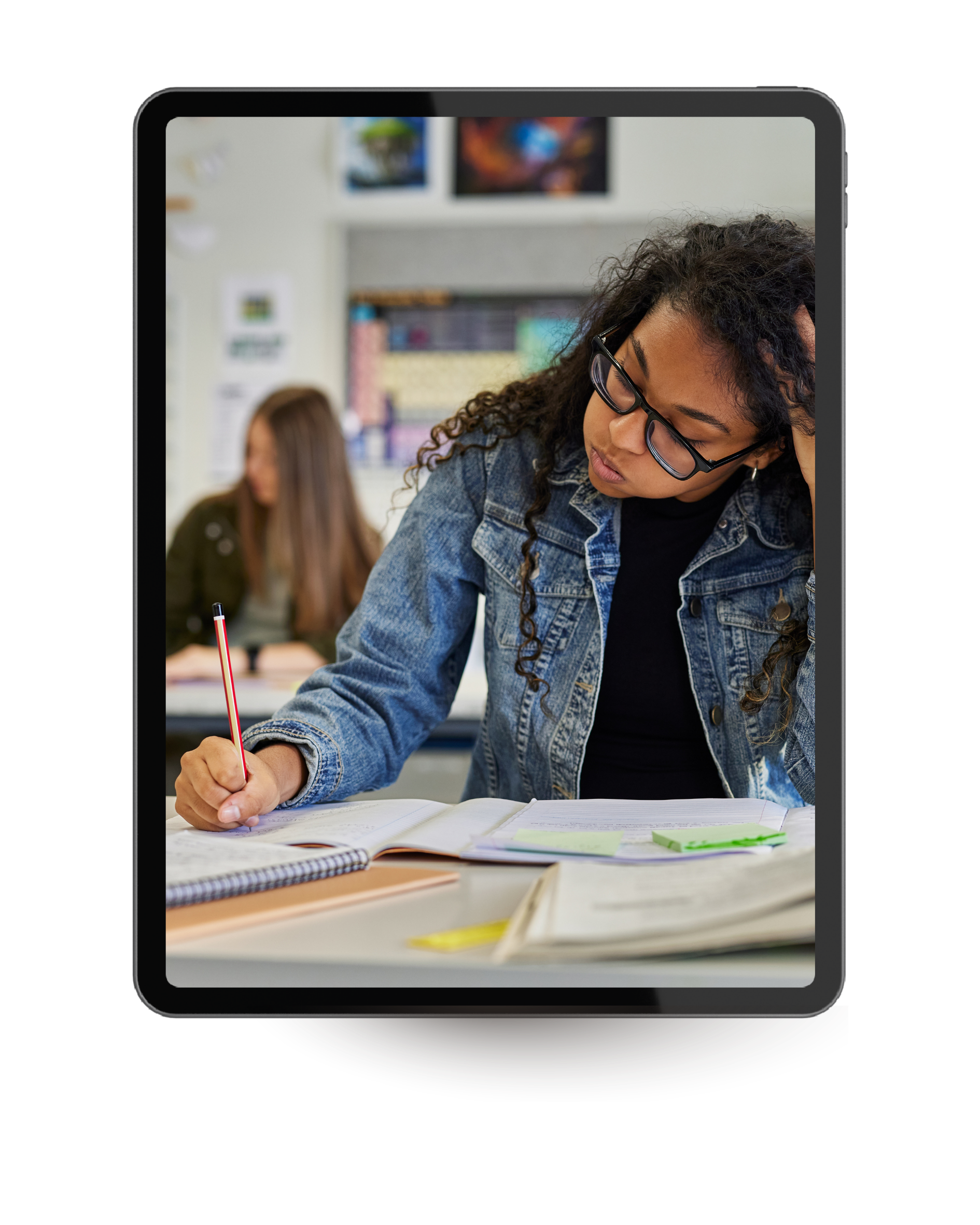
PDA School Guide
Practical school strategies for supporting PDA-profile students through autonomy, connection, and low-pressure support.